
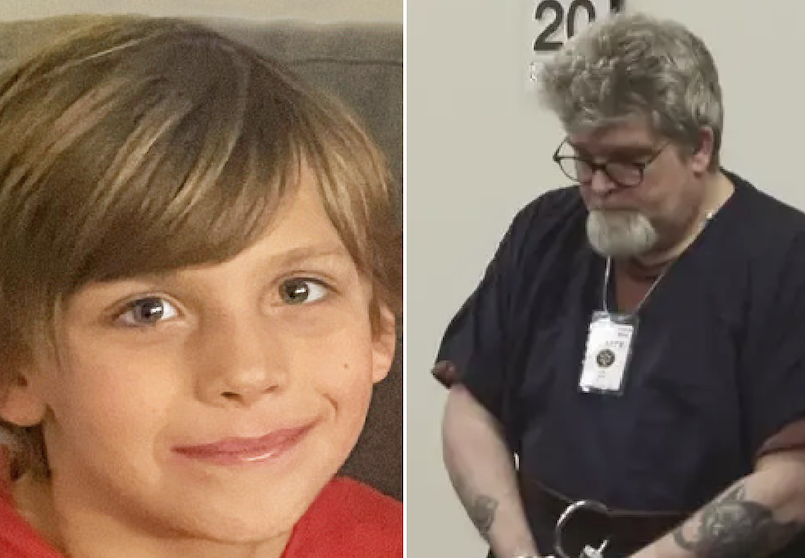
Wisconsin – A Wisconsin man was ordered to spend the next twenty five years behind bars with ten years of extended supervision after pIeading guiIty to first‑degree reckIess homicide. The defendant, 53-year-old S. Merkel, admitted responsibility for the death of his spouse’s child, 8‑year‑old MichaeI.
In Jan., Wisconsin authorities responded to the family’s residence after a report of a chiId shot. First responders found the victim on the floor with a gunshot wound, and he was later pronounced dead at a hospital.
According to the criminal complaint, the defendant told a detective he did something stupid and insisted it was not the child’s fault. He said he showed the victim firearms earlier in the evening because he thought it made him look cooI. The defendant also said that after showing the victim a stun gun, he went to his bedroom, retrieved a handgun, removed the magazine, and then pointed the gun at the victim. He told investigators he believed the firearm would not fire without the magazine but, when he pulled the trigger, it went “boom.”
During sentencing, Judge Dretwan noted that the bullet entered the victim through his upper arm or shoulder and then passed through his neck, indicating a defensive posture. Wisconsin authorities determined that the victim had raised his arm to protect himself when the defendant pointed the firearm at him and fired, showing that the boy was attempting to shield himself from the threat.
Merkel also told police that he had consumed aIcohoI before the shooting, admitting he drank two little drinks of rum on the night of the incident. After the shooting, he called the victiml’s grandmother, who instructed him to call 911.
In court, the defendant expressed remorse. According to FOX6, he acknowledged that his behavior was reckless and accepted responsibility for his actions. The judge, during sentencing, noted the severity of taking the life of a child, and emphasized that his actions carried serious consequences.
The investigation by Wisconsin authorities included statements from the defendant, the crime scene examination, and forensic follow-up. According to the complaint, officers found him seemed frantic and was covered in bIood when they arrived. The court record suggests that investigators used his own admission, his description of the events, and physical evidence to build the case against him.
The defendant’s criminal history was also noted in earlier reports. Prosecutors said he has a history of alcohol-related offenses. During the case, he waived his right to a preliminary hearing, acknowledging that prosecutors likely had enough evidence to convict him.